Research
Under the HIVE banner (Hydrogen, Intelligent Vehicles, and Energy), our work spans nanophotonics, electrochemistry, and AI.
Green Hydrogen & Energy Materials
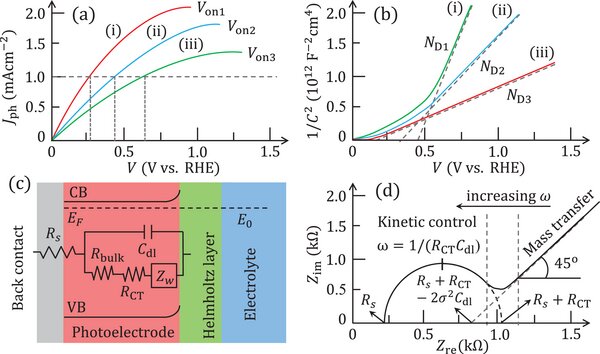
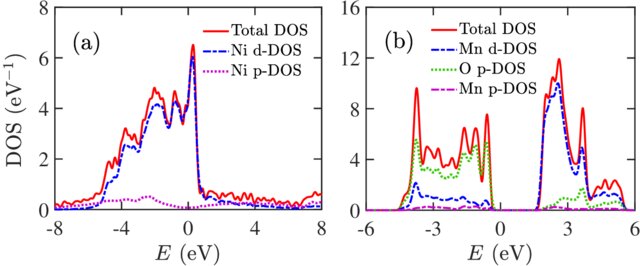
Hydrogen burns cleanly, but making it cleanly is the hard part. We use quantum mechanical simulation to look for cheap and abundant materials that can split water using little more than sunlight, and to understand why the good ones behave as they do. Three efforts run alongside each other. The first re-engineers hematite, a common iron oxide, into an efficient light absorbing electrode by adding small amounts of boron, yttrium and niobium. The second replaces precious metal catalysts with engineered nickel and manganese oxide surfaces that match platinum in the amount of hydrogen they release. The third asks how alloy electrodes speed up the oxygen side of the reaction and how they eventually corrode, since a good electrode also has to last.
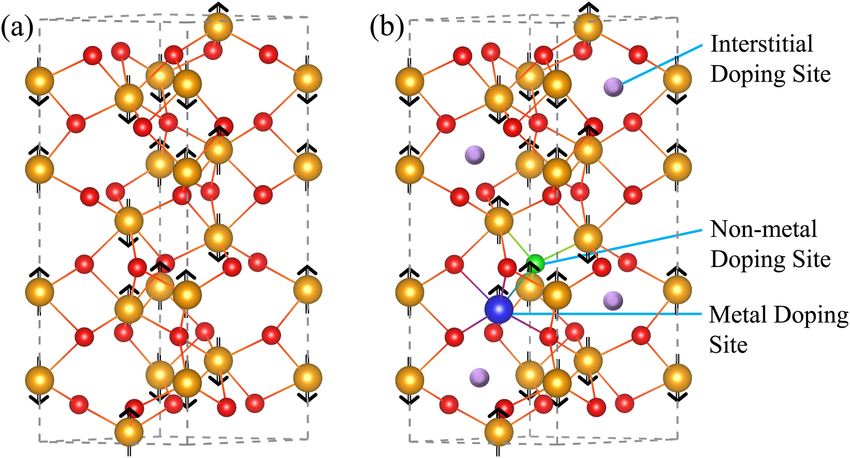
Hexagonal close-packed crystal structure of pristine α-Fe2O3 with the arrow symbol for Fe atom magnetic spin direction at z-axis
Intelligent Vehicles & Batteries
A battery pack ages invisibly. Nothing on the outside tells you how much capacity has quietly disappeared, and two packs sold as identical can wear out at very different rates depending on how they are driven and charged. Our group trains deep networks to read that hidden state from the ordinary measurements (voltage, current and temperature) a pack already reports and to keep working across packs with quite different usage habits. We are now moving those estimators off the PC and onto the hardware, in a smart charger that carries out the diagnosis on its own small processor without sending anything to the cloud.
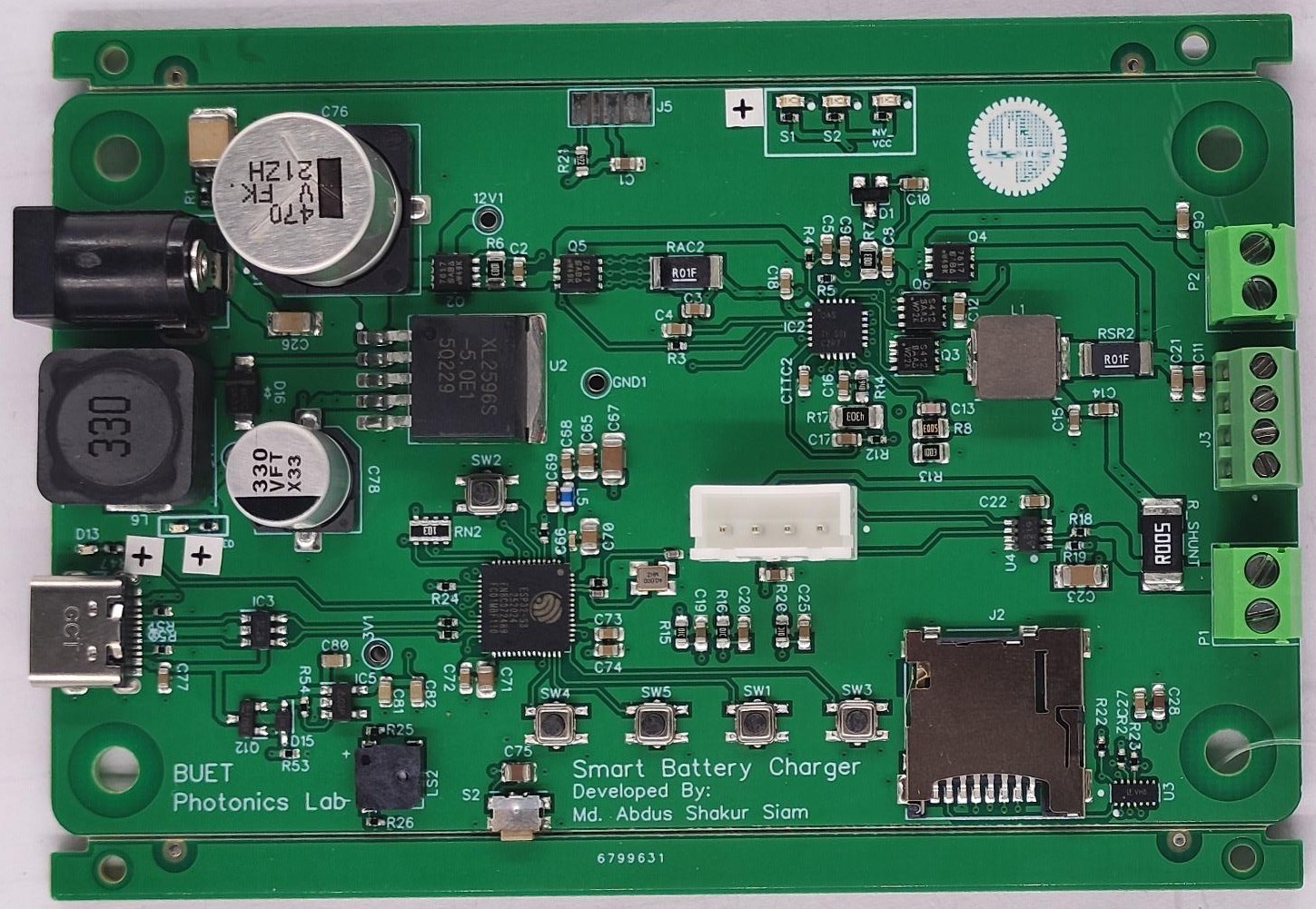
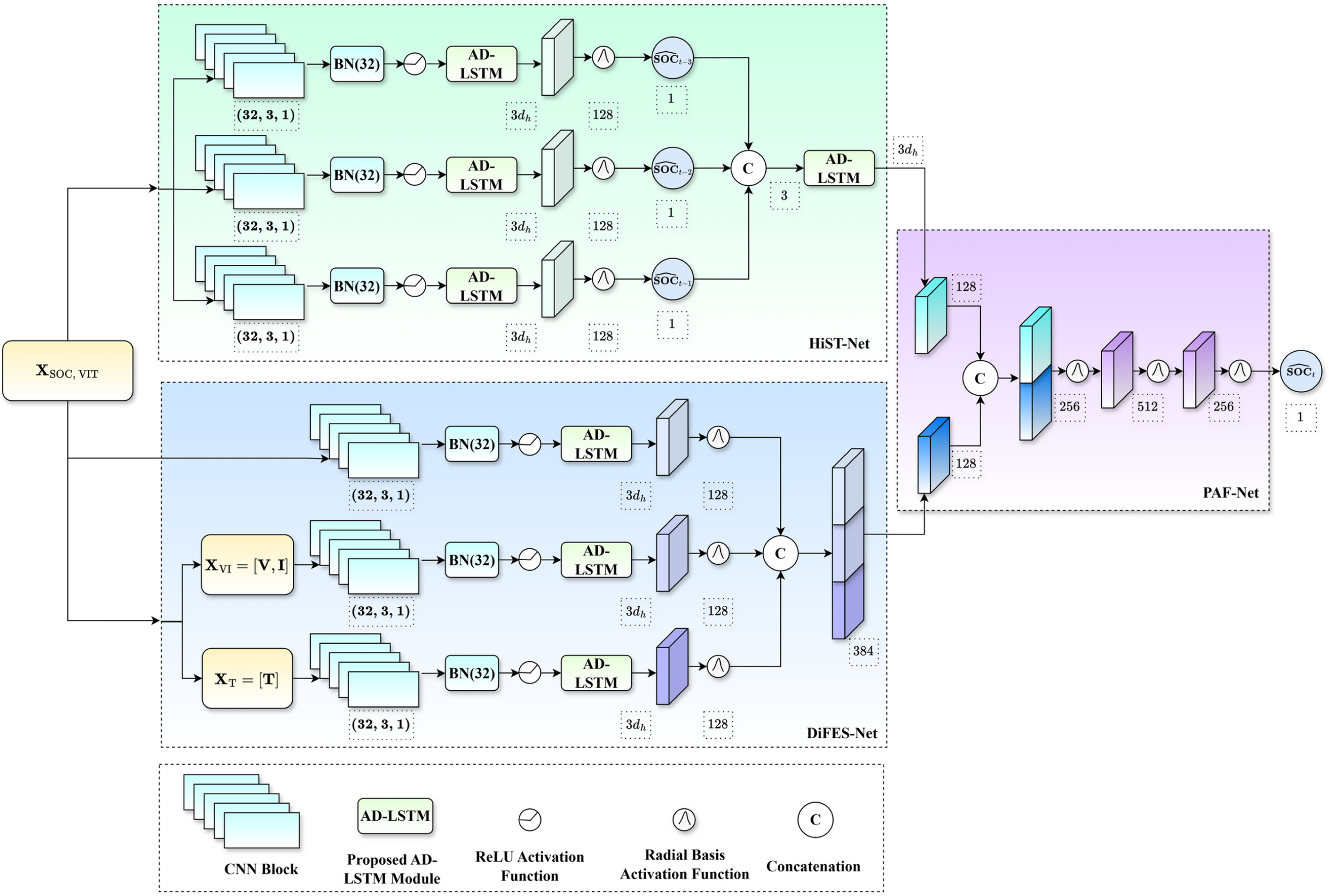
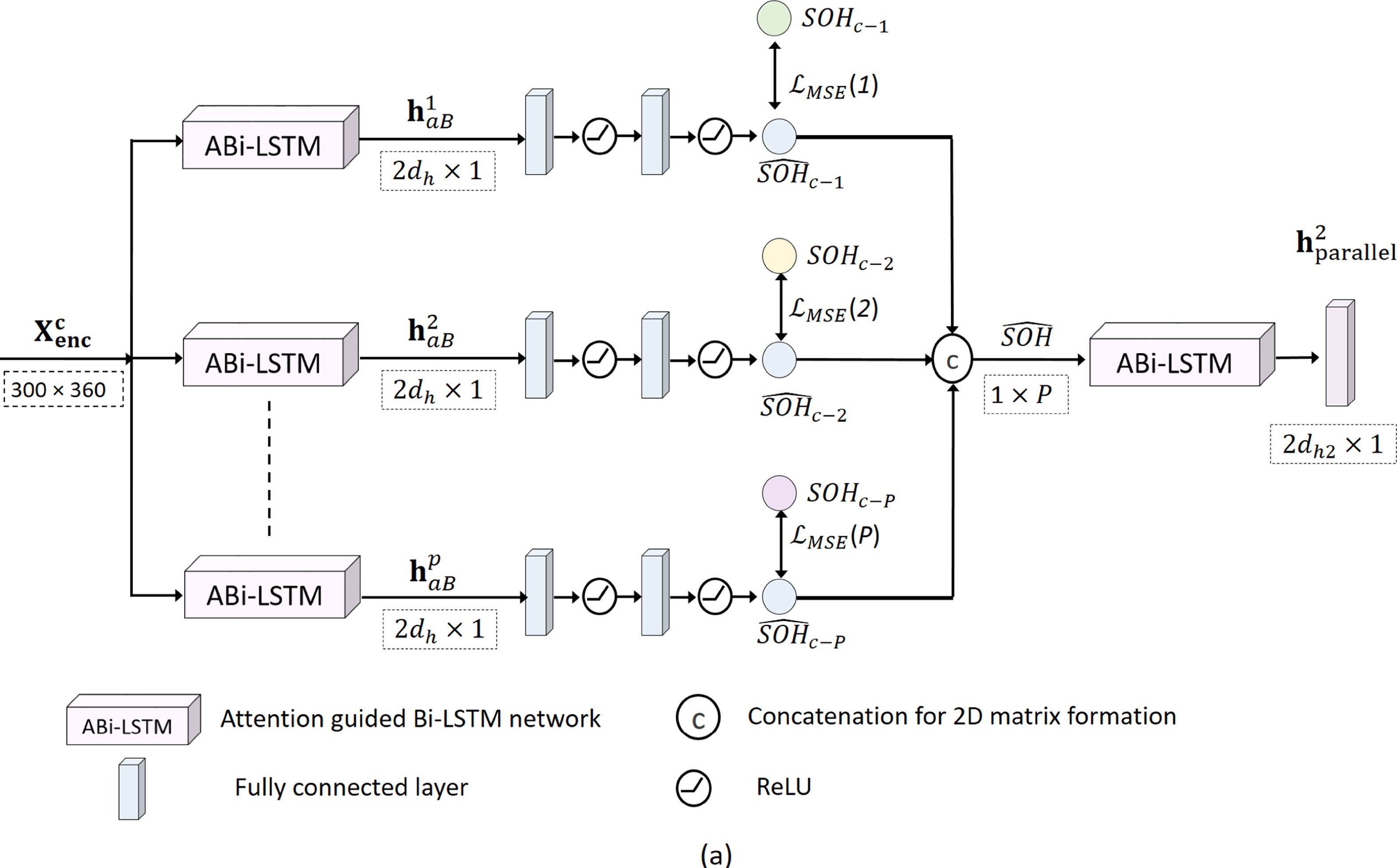
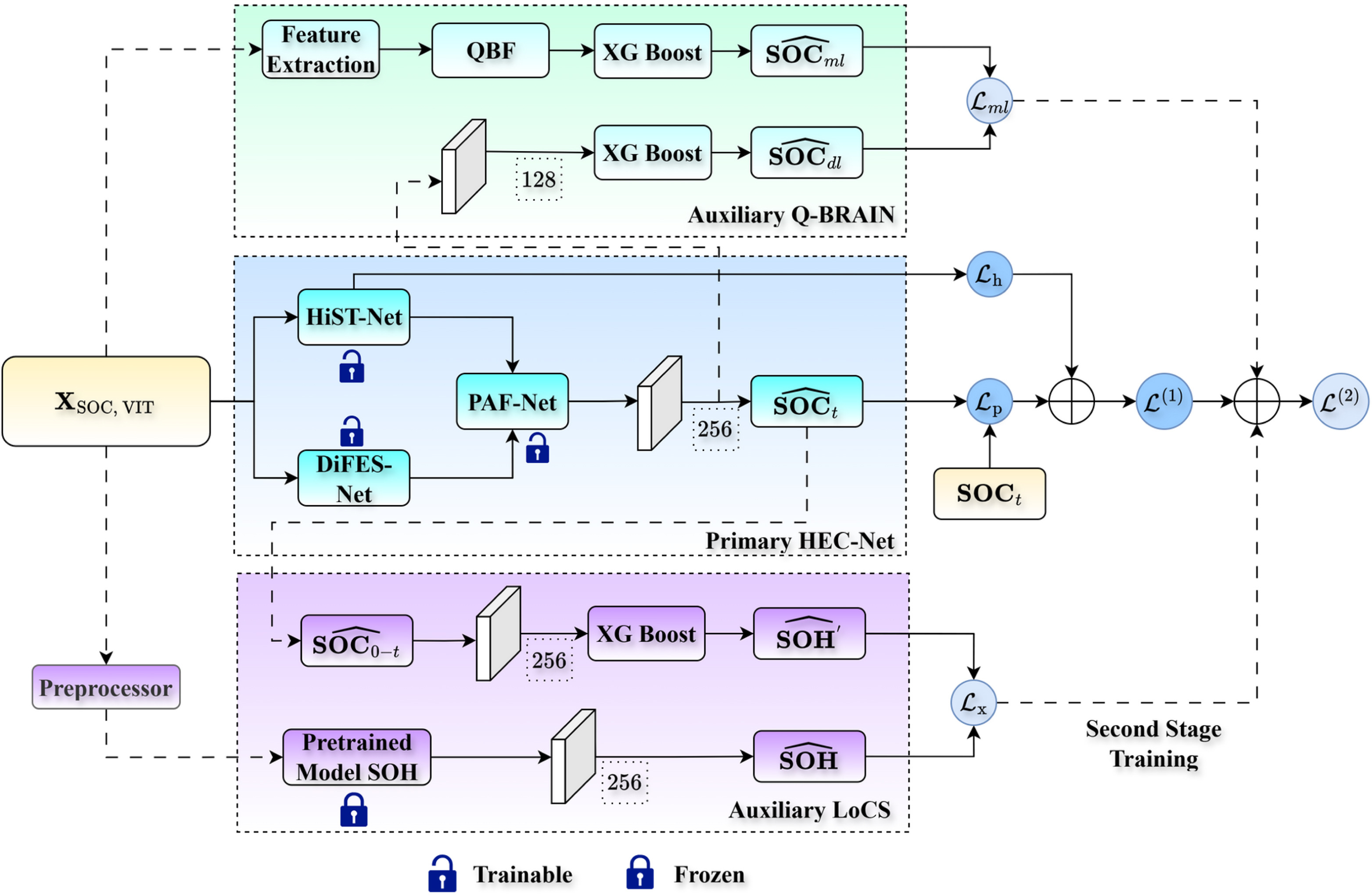
The edge smart battery charger
Biosensing, Imaging & Microscopy
Diagnostic imaging usually means a hospital, a bench top microscope and a specialist to read the result. Our newest effort shrinks that apparatus into a hand held device that clips onto a phone and runs its own analysis, so that a careful look at a sample no longer requires a laboratory. The same idea runs through the optical work behind it. Light bound to a metal surface is extremely sensitive to whatever sits on it, and we use the light such a surface emits to image living cells in three dimensions, first on a prism and later in a quieter on chip form. We also design graphene and photonic crystal structures whose optical modes pick out haemoglobin or viral spike protein at very low concentration, and we improve the sensors themselves by reading several optical signatures from a single nanohole array at once.
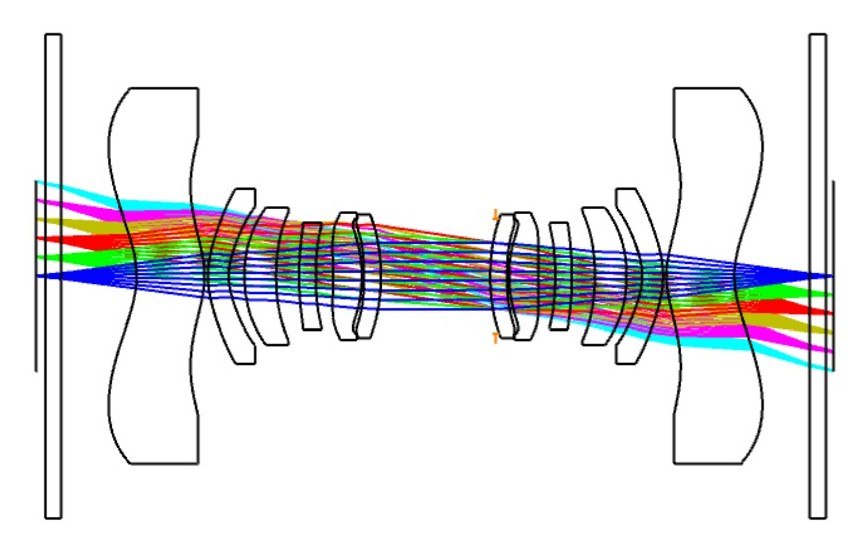
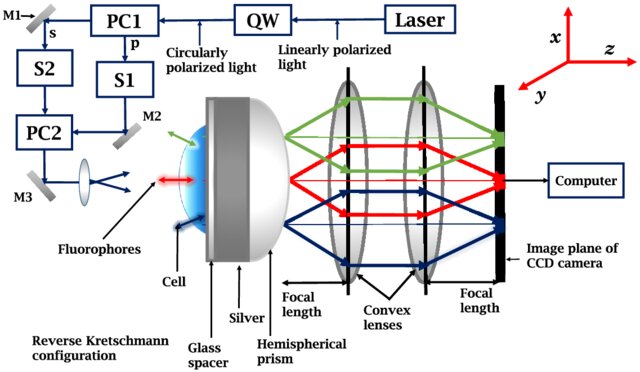
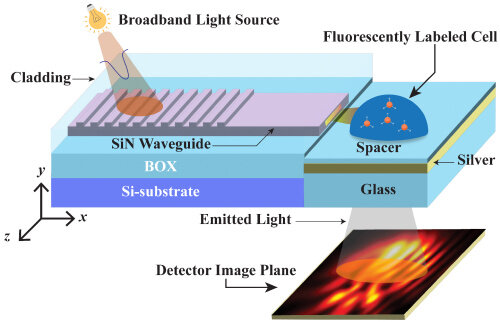
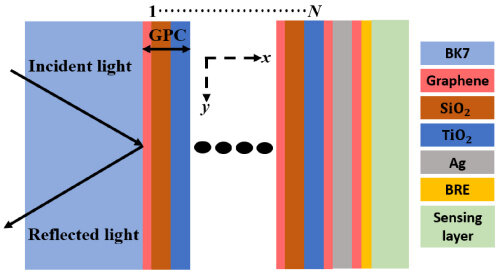
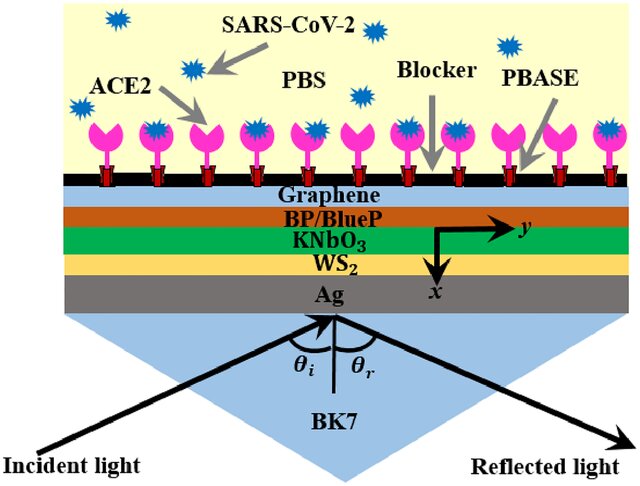
Optical layout of the compact phone-mounted objective
Supercapacitors & Energy Storage
Supercapacitors charge in seconds but hold far less energy than batteries. Their capacity is decided inside pores only a few atoms across, where ions crowd together and stop behaving the way they do in open solution. We build the carbon electrode atom by atom until the model matches real samples, then use it to watch ions move in and out. That reveals a sweet spot in pore size. Pores that are too narrow will not admit the ions at all, while pores that are too wide barely hold on to them.
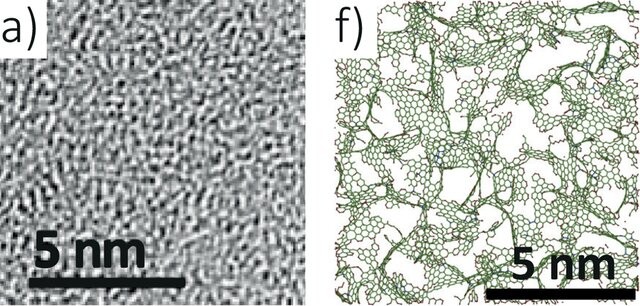
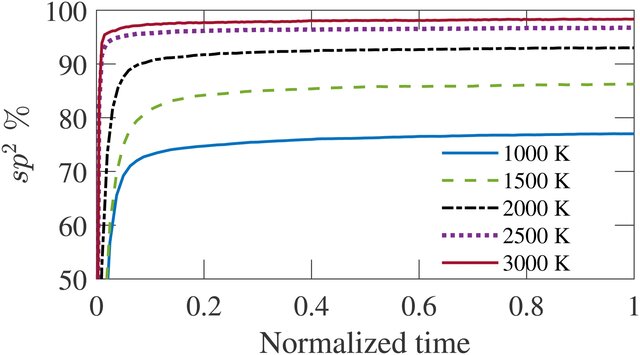
Electron micrograph of the carbon beside its atomistic model
Mid-Infrared & Terahertz Quantum Cascade Lasers
A quantum cascade laser is engineered one electron step at a time. Its colour does not come from a material's natural energy gap but from a staircase of very thin layers that we design, which is what allows these sources to reach the mid infrared and terahertz bands used in gas sensing and imaging. We design cascades that exploit quantum coherence to emit two photons per electron at terahertz frequencies, and we model how carriers travel down the staircase in order to explain the unexpectedly slow recovery of gain seen in pump probe measurements.
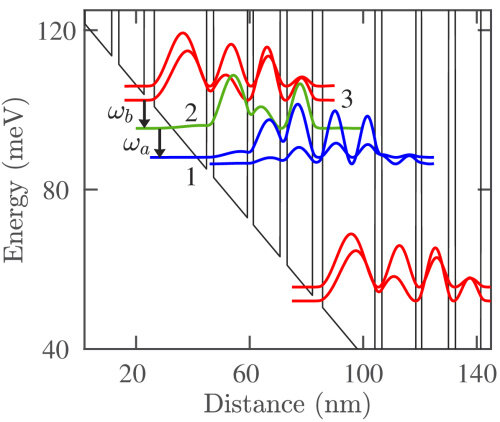
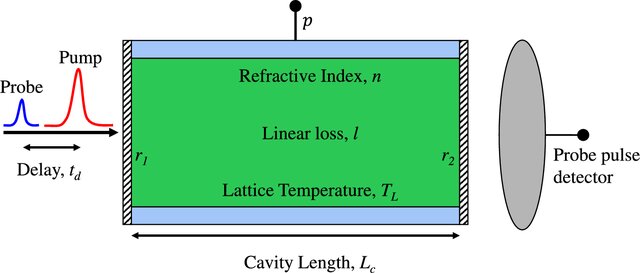
Energy staircase and electron wavefunctions of the cascade
Plasmonic Photovoltaics
A solar cell can only convert the light it manages to absorb. We shape surfaces on the scale of the wavelength itself, borrowing geometry from nature where it helps, so that thin and inexpensive layers trap as much light as thick ones. Alongside the cell we study the systems built around it. One question is how much of a photoelectrochemical cell's voltage is lost at the electrode before any fuel is produced. Another is whether turning captured carbon dioxide directly into solar fuel can ever pay for itself.
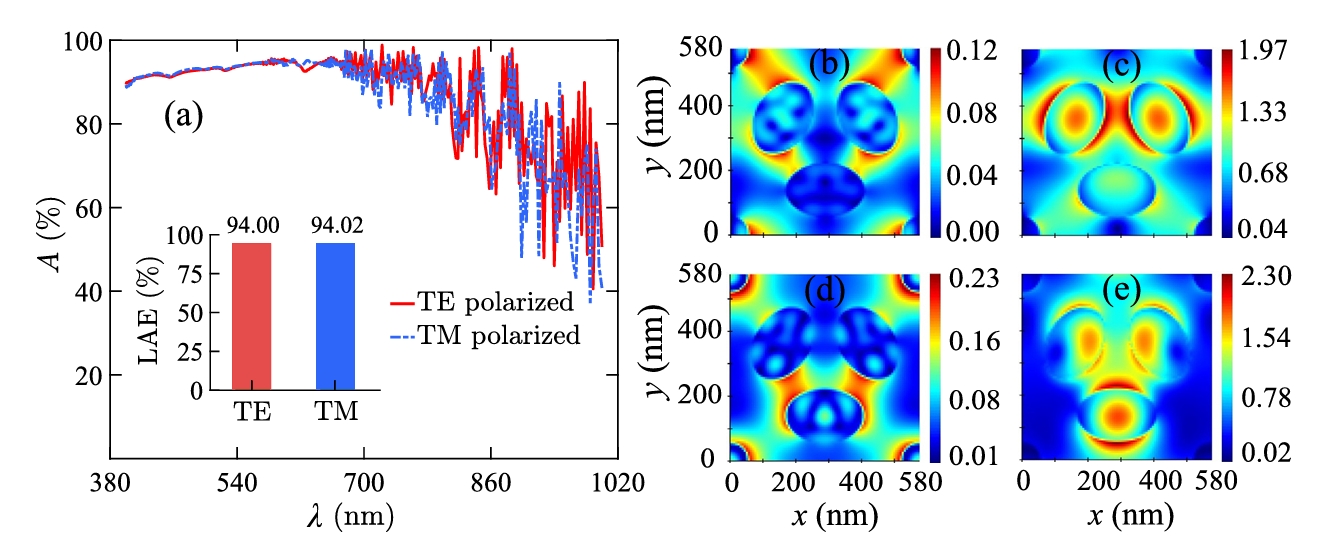
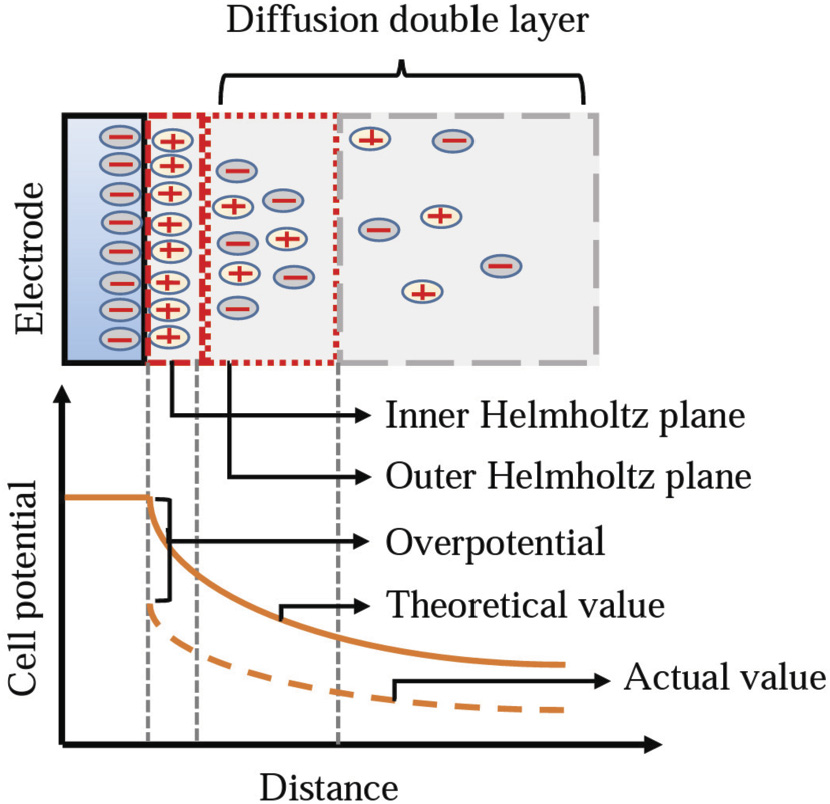
Absorption spectra and near-field maps showing polarization-insensitive response of the MTHN nanopillar array
Plasmonic Nanolasers
An ordinary laser cannot be made smaller than the wavelength of its own light. A plasmonic cavity can, because the light is carried partly by electrons moving in the metal, although that same confinement makes the mode structure delicate and difficult to control. We treat the difficulty as an opportunity. Some of our cavities send each wavelength in its own direction, and steer electrically once a liquid crystal is added. Others are nanohole arrays whose resonances are tuned by deliberately breaking their periodicity, which yields several modes and very low thresholds. A coupled dye gain medium then lets such a cavity emit short pulses.
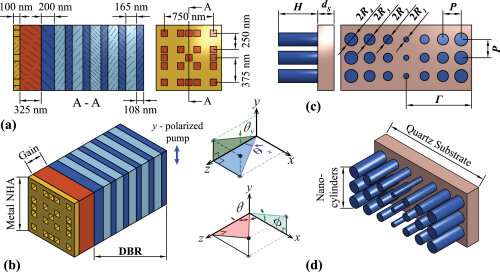
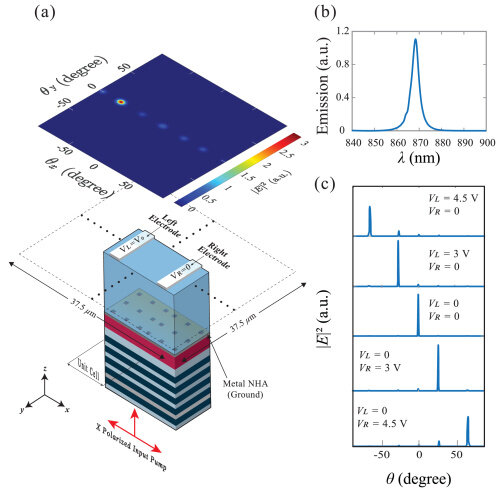
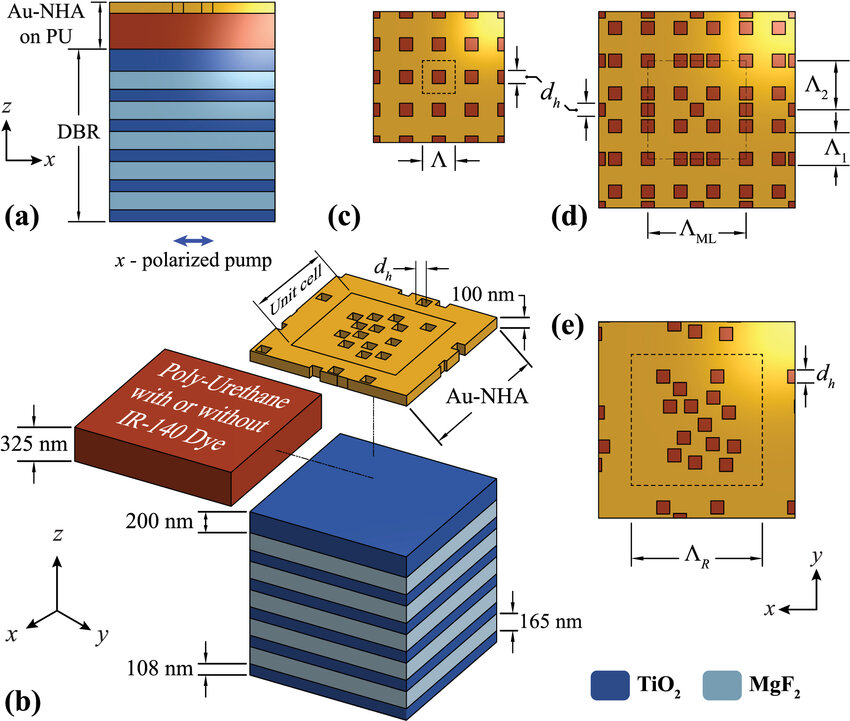
Plasmonic nanolaser (metal nanohole array, gain layer, DBR) and a phase-gradient metasurface of graded-radius TiO₂ nanocylinders on quartz.
Mapping Brain Microstructures
Diffusion MRI follows the way water moves through brain tissue. Water travels along nerve fibres more readily than across them, so the signal carries information about structures far too small to image directly, provided the underlying geometry is modelled carefully. We use that route to relate the microstructure of white matter to cognitive processing speed, which is measurably reduced in schizophrenia.
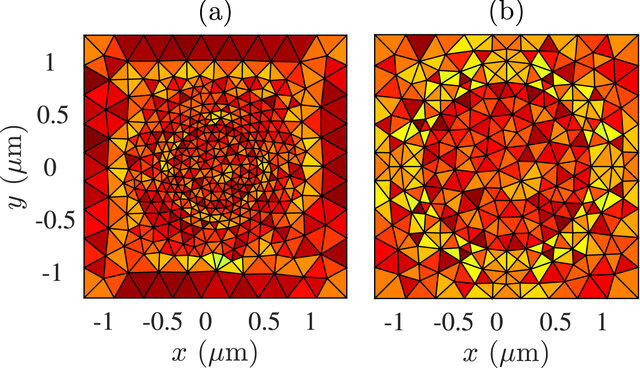
Finite-element mesh grids for one period of the periodic array of axons when the axon diameter is (a) 0.8 μm and (b) 1.6 μm